Skip to content

Performance Max, run with human judgement.

Performance Max puts your budget on every Google surface at once, from one campaign. Brilliant when it's fed clean conversion data and watched closely. Expensive when it isn't.

  • Search
  • Display
  • YouTube
  • Gmail
  • Maps
  • Discover

Part of Google Ads management at Aesthetic.

What you're actually buying

One campaign, every Google surface.

You hand Google assets, audience signals and a goal. The AI decides where your ads show and what each click is worth. That trade is the whole story of Performance Max, and it cuts both ways.

What it is

Automation across the whole network.

One campaign type that bids on Search, Shopping, Display, YouTube, Gmail, Maps and Discover at once. You control the inputs: creative assets, audience signals, product feed and the conversion goal. Google controls placement and bid.
When it works

Clean data, steady volume.

Ecommerce with a healthy product feed. Accounts producing roughly 30+ conversions a month with tracking that reports true revenue. The AI learns from your conversion data, so the better the data, the smarter the spend.

When it's the wrong tool

Thin data, no feedback.

Low conversion volume, lead gen with no lead quality feedback, tracking that double-counts or misses sales, or a brand-new account with no history. Performance Max amplifies whatever you feed it, including the mistakes.

How Aesthetic runs it.

  1. Tracking before spendConversion data audited and fixed first. The AI optimises to whatever the tracking says, so the tracking has to be telling the truth.
  2. Structure with intentAsset groups split by margin and product intent, feed cleaned, brand traffic excluded so the campaign can't claim wins it didn't earn.
  3. Judgement on a cadenceWeekly calls on budgets and ROAS targets, with reporting that separates real incremental wins from claimed credit.

What the dashboard hides

Set-and-forget is how budgets disappear.

Performance Max will spend whatever you give it and report a healthy ROAS while doing it. The problems hide underneath the headline number.

  • It claims your brand trafficWithout brand exclusions, the campaign counts searches for your own name as wins it created. The ROAS looks great because it includes sales you'd have made for free.
  • It spends where you can't seeNo placement breakdown by default. Budget drifts into low-grade Display and app inventory while the dashboard stays green.
  • It grades its own homeworkThe campaign attributes conversions to itself that email, SEO or another channel actually earned. Reporting has to separate incremental revenue from claimed credit.
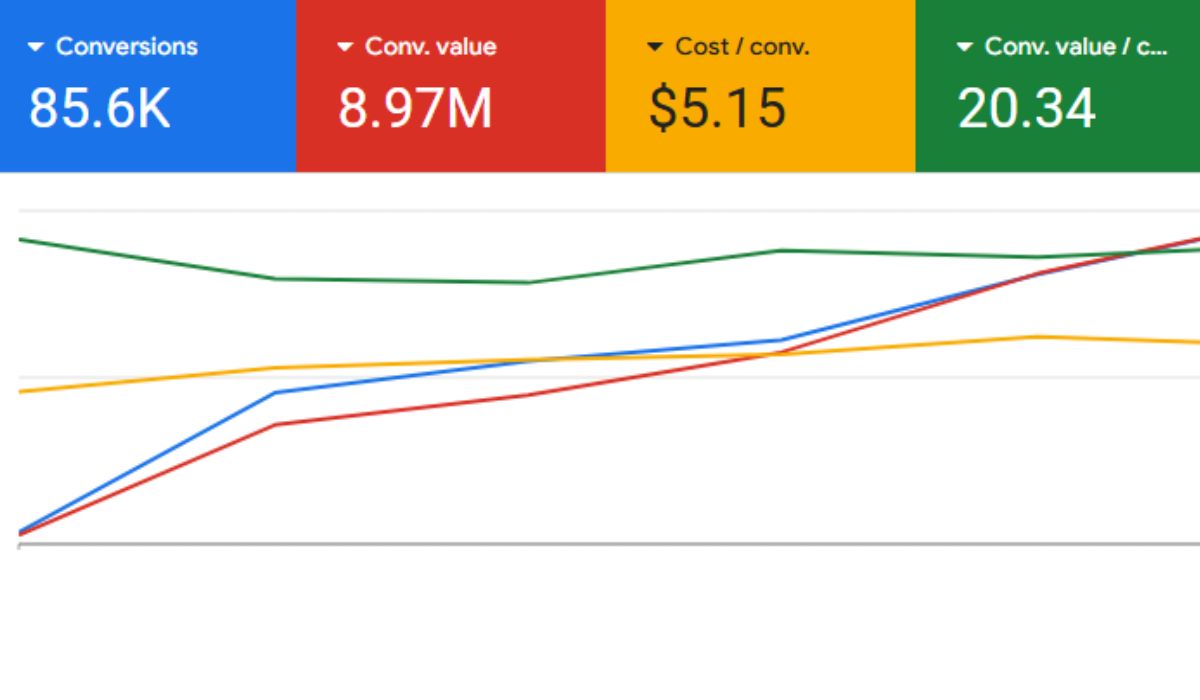
Live Performance Max account managed by Aesthetic showing nine million dollars in revenue at twenty times return on ad spend
  • 20xConsistent ROAS, held across campaigns
  • $9MRevenue generated in under 2 years

A live Performance Max account run by Aesthetic, with brand traffic excluded and revenue verified against the store, not the dashboard.

Free ROAS calculator

Your real return, not the dashboard's.

ROAS without margin is a vanity number. This calculator works out what your ads return after the cost of what you sell, for Google, Meta or any paid channel.

$

What you pay the ad platform each month.

$

The revenue those ads brought in.

%

The share of each sale you keep after the cost of the product or service.

Your ROAS

3.0x

Profitable. Every ad dollar makes money after costs.

Return needed to break even

2.2x

Profit left each month

$1,050

Kept per $1 spent on ads

$0.35

ROAS return on ad spend

Revenue divided by ad spend. A 3x ROAS means every dollar of ads brought back three dollars of revenue. It says nothing about profit until margin enters the picture.

Breakeven ROAS the floor

One divided by your gross margin. At a 45% margin you need 2.2x just to cover the cost of goods and the ads. Anything below this line is a loss wearing a revenue costume.

Profit on ads the real number

What's left after paying for the products and the ads. Revenue is money moved; this is money kept, and it's the number your bidding targets should answer to.

The calculator runs in your browser. Your numbers aren't stored or sent anywhere.

Is Performance Max worth it?

Worth it when the account has clean conversion tracking, a healthy product feed and roughly 30+ conversions a month for the AI to learn from. Below that volume, or with unreliable tracking, Search campaigns give you more control and clearer data while volume builds.

Most accounts should earn their way into Performance Max rather than start with it.

How many conversions does it need before it works?

A practical floor is 30 conversions a month at the account level, with accurate revenue values attached. The bidding learns from your conversion data, so thin or noisy data means slow learning and wasted spend while it guesses.

Where do Performance Max ads actually show?

Everywhere Google sells inventory: Search, Shopping, Display, YouTube, Gmail, Maps and Discover, all from the one campaign. You can't pick the channels individually. Google decides the mix based on where it predicts conversions, which is exactly why the inputs and exclusions matter so much.

How long does it take to learn?

Expect two to six weeks before performance stabilises, depending on conversion volume. Big edits reset parts of that learning, so changes get batched and budgets move gradually rather than getting yanked around.

Patience here is a strategy, not an excuse.

What are asset groups, and how should they be structured?

An asset group is the bundle of headlines, images, video and products that Performance Max assembles ads from. Structure them around margin and intent, not your site navigation: high-margin hero products deserve their own group, and clearance stock should never share a group with them.

What budget does Performance Max need?

Enough to buy meaningful conversion volume, which depends on your cost per sale. A useful rule: a daily budget of at least three times your expected cost per conversion, held steady through the learning period. Spreading a small budget across many asset groups starves all of them.

Does it work for lead generation?

It can, with one hard requirement: lead quality feedback. Without offline conversion data flowing back, the AI optimises for whoever fills out a form fastest, and form-fill bots are very fast.

Ecommerce hands PMax clean revenue signals by default. Lead gen has to build that feedback loop first.

Performance Max or Standard Shopping?

Standard Shopping gives you query and bid control; Performance Max gives you reach across every surface. Many ecommerce accounts run feed-only asset groups for Shopping-style control with PMax reach.

The full breakdown is on the Shopping ads page.

Performance Max or Search campaigns?

Not either-or. Search catches the demand you can name with keywords; Performance Max finds the demand you can't. Most accounts run both, with Search protecting the highest-intent queries and PMax expanding around them.

If you can only run one and your tracking is thin, run Search.

Can it run alongside my Search campaigns?

Yes, and it should. The rule Google applies: if a query exactly matches a keyword in an eligible Search campaign, Search wins. For everything else PMax can take the auction, which is why your Search campaigns need tight keyword coverage on the queries that matter most.

Why is it taking credit for my brand searches?

By default the campaign can serve on searches for your own name, then count those near-certain sales as wins it created. The fix is brand exclusions, so the campaign gets measured on demand it actually generated.

It's the first setting checked in every account Aesthetic audits.

Can I see which placements or search terms it used?

Only partially. Google exposes search themes and category-level insights rather than a full search terms report, and placement reporting is limited. Channel-level spend can be reconstructed with scripts, which is part of how Aesthetic reports where the budget actually went.

Should I set a target ROAS, and what should it be?

Yes, once the campaign has conversion history. The target should sit above your breakeven ROAS, which is one divided by your gross margin. Feeding PMax a target below breakeven tells the AI to scale losses.

The calculator on this page works out both numbers from your margin and spend.

My ROAS looks great. Why doesn't the bank account agree?

Three usual suspects: the ROAS includes brand sales you'd have made anyway, the target sits below your breakeven once margin is counted, or the campaign is claiming conversions that email and organic actually earned.

The fix is brand exclusions, a margin-based target and reporting that verifies revenue against the store, not the dashboard.

Ready when you are

Put judgement back in the loop.

A free 30-minute call with the strategist who'd run your account. Bring your Performance Max campaign and leave knowing whether it's pulling its weight or coasting on brand traffic.