Skip to content

Google Search ads that catch buyers mid-search.

Search ads put you in front of people already typing what you sell. The highest-intent traffic money can buy, and the easiest to waste on queries that will never convert.

  • Keywords
  • Match types
  • Negatives
  • Ad copy
  • Assets
  • Landing pages

Part of Google Ads management at Aesthetic.

Before the first click

Buying the moment someone searches.

You choose the queries, write the ad and pay when someone clicks through. No audience guessing, no demand creation. Search ads harvest intent that already exists, which is both their power and their ceiling.

What it is

Text ads, triggered by keywords.

Your ad shows on the results page when someone types a query you've chosen to bid on. You control the keywords, match types, negatives, copy and landing page. Google controls the auction and charges per click.
When it works

Existing demand, clear economics.

People are already searching for what you sell: trades, services, considered purchases, urgent problems. It works when the maths works, when a click costs less than a converted customer is worth, with room to spare.

When it's the wrong tool

No searches, no auction.

New categories nobody knows to search for, impulse products, or markets where click prices have outgrown your margins. Search can't create demand, it can only catch it. Creating it is a job for video and social channels.

How Aesthetic runs it.

  1. Map the intentEvery keyword sorted by what the searcher actually wants: buy now, compare, or browse. Budget weights toward the queries with proof of intent behind them.
  2. Match message to queryAd copy mirrors the search, landing pages mirror the ad. Relevance is what lowers your cost per click while competitors overpay for the same spot.
  3. Prune on a cadenceSearch term reports reviewed weekly. Junk queries become negatives, winners get their own budgets, and nothing is left to drift.

Where the clicks leak

Most accounts pay for searches they never wanted.

Google's defaults are built to spend, not to filter. Left alone, a Search campaign drifts toward whatever queries are easiest to sell you.

  • Broad match by defaultNew campaigns get nudged toward broad match and auto-applied recommendations. Your ad ends up showing for searches a human would never have approved.
  • No negatives, no filterWithout a maintained negative keyword list, you pay full price for clicks from job seekers, DIY researchers and people looking for a competitor.
  • Expansion you didn't ask forSearch partners and Display expansion get ticked quietly at setup. Budget meant for the results page bleeds into placements with a fraction of the intent.
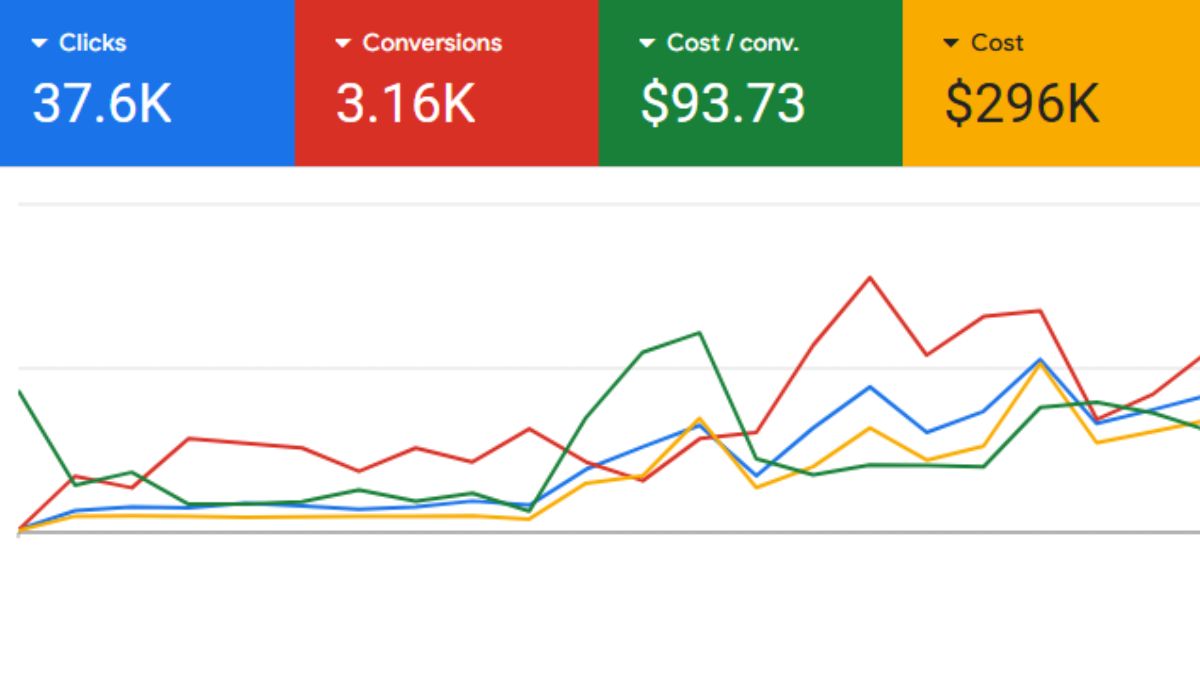
Live Google Ads search account managed by Aesthetic showing more than three thousand leads generated
  • 3,000+Leads generated in under 3 years

A live lead generation account run on Google Search by Aesthetic, measured in leads delivered, not clicks bought.

Free ROAS calculator

Your real return, not the dashboard's.

ROAS without margin is a vanity number. This calculator works out what your ads return after the cost of what you sell, for Google, Meta or any paid channel.

$

What you pay the ad platform each month.

$

The revenue those ads brought in.

%

The share of each sale you keep after the cost of the product or service.

Your ROAS

3.0x

Profitable. Every ad dollar makes money after costs.

Return needed to break even

2.2x

Profit left each month

$1,050

Kept per $1 spent on ads

$0.35

ROAS return on ad spend

Revenue divided by ad spend. A 3x ROAS means every dollar of ads brought back three dollars of revenue. It says nothing about profit until margin enters the picture.

Breakeven ROAS the floor

One divided by your gross margin. At a 45% margin you need 2.2x just to cover the cost of goods and the ads. Anything below this line is a loss wearing a revenue costume.

Profit on ads the real number

What's left after paying for the products and the ads. Revenue is money moved; this is money kept, and it's the number your bidding targets should answer to.

The calculator runs in your browser. Your numbers aren't stored or sent anywhere.

What's the difference between Search ads and SEO?

Search ads buy a spot on the results page today; SEO earns one over months. Paid traffic stops the day the budget stops, while organic compounds but takes time to build.

The practical answer for most businesses is sequencing: Search ads validate which queries actually convert, then SEO goes after the proven ones.

Which keyword match types should I use?

Start with phrase and exact for control, and add broad match only once smart bidding has clean conversion data to steer it. Broad match with weak tracking is how budgets vanish.

Treat match type as a control dial: loosen it as the account proves it can convert, never before.

Why does Google keep recommending broad match?

Because it serves Google's inventory first and your intent second. Broad match gives the auction more room to spend your budget, which is good for Google whether or not it's good for you.

Some broad match recommendations do earn their keep in mature accounts with strong conversion data. Auto-applying them does not.

What are negative keywords, and why do they matter so much?

Negatives are the searches you refuse to pay for: job seekers, DIY researchers, freebie hunters, wrong locations. Every Search account leaks money through queries that look close to your keywords but never convert.

A maintained negative list is the cheapest optimisation in Google Ads.

Should I bid on my own brand name?

Usually yes, for two reasons: competitors can bid on your name and sit above your organic listing, and brand clicks are the cheapest in the account.

But brand performance should be reported on its own line, because mixing near-certain brand sales into the campaign average flatters every other number.

Why are my cost-per-clicks so high?

High CPCs usually trace back to bidding on broad, competitive head terms instead of specific long-tail queries, low ad relevance pushing the price up per auction, or smart bidding chasing conversions with no guardrails.

What a click can afford to cost is a margin question. The calculator on this page works it out from your numbers.

Does Quality Score still matter?

As a diagnostic, yes. As an obsession, no. Quality Score is Google's one-to-ten read on how relevant your keyword, ad and landing page are to each other, and a low score means paying more for the same position.

Fix the relevance problems it points at, then stop staring at the number.

What are responsive search ads, and do I still control the copy?

A responsive search ad is up to 15 headlines and 4 descriptions that Google mixes per query. You control every line that can possibly show, and pinning locks key messages into position.

The real control is in writing each asset deliberately rather than feeding the machine filler to hit the asset count.

Smart bidding or manual CPC?

Smart bidding wins once the account has conversion volume and tracking it can trust. Manual bidding is the training-wheels phase while that data builds.

The honest answer is staged: prove the tracking, build conversion volume, then hand the bidding over with targets based on your real margins rather than Google's suggestions.

What decides my position on the results page?

Ad rank decides it auction by auction: your bid and ad quality against everyone else's. Top of page costs more than bottom, and absolute top costs most of all.

Position is a budget decision. For urgent, one-click searches the top spot is worth the premium; for research queries it often isn't.

Should my ads run on search partners and the Display Network?

Off by default in accounts Aesthetic runs, then re-added only with evidence. Search partner and Display traffic is cheaper because the intent is lower, and it quietly drags the campaign average down while the dashboard reports it all as Search.

If a placement can't prove conversions on its own line, it doesn't keep budget.

Why can't I see every search my ads showed for?

Google filters low-volume queries out of the search terms report, so a slice of your spend sits behind searches you can't inspect.

The counter is tighter match types and aggressive negatives, which shrink that invisible portion to a rounding error instead of a leak.

Do Search ads work for ecommerce, or just lead gen?

Both, with different jobs. For ecommerce, Search protects the high-intent product and brand queries while Shopping and Performance Max handle the catalogue.

For lead gen it's usually the core channel, because a person typing their problem into Google is the warmest lead the internet produces.

Ready when you are

Put judgement back in the loop.

A free 30-minute call with the strategist who'd run your account. Bring your Search campaigns and leave knowing which queries are paying for themselves and which are just spending.